Leave A Message
If you are interested in our products and want to know more details,please leave a message here,we will reply you as soon as we can.


In modern landscape and architectural design, the concept of "Quiet Luxury" is taking center stage. Homeowners and commercial spaces are moving away from overly complicated, high-maintenance exteriors. Instead, they are embracing the Japandi style—a design philosophy that blends Japanese minimalism with Scandinavian functionality, focusing on clean lines, warm neutral tones, and natural textures.
However, executing this minimalist vision outdoors comes with a practical challenge: how do you maintain the warm, authentic look of natural wood without the heavy maintenance that traditional timber requires?
This case study explores how WPC (Wood Plastic Composite) Decking serves as the perfect material to achieve this ultimate outdoor sanctuary.
The Design Vision: Minimalist, Warm, and Effortless
The goal for this outdoor project was to create a seamless transition between the indoor living space and the outdoors. The design required a foundation that felt organic and grounded, appealing to minimalist minds while exuding a subtle, quiet luxury.
To achieve this, the selected material needed to offer:
A Natural Aesthetic: Authentic wood grain texture to provide warmth.
A Warm Neutral Palette: Colors that complement natural surroundings rather than competing with them.
Uncompromising Longevity: A surface that remains pristine year after year without constant upkeep.
The Solution: Natural Wood Grain WPC Decking
Wood Plastic Composite (WPC) was selected as the core material for this project. By marrying the visual warmth of natural wood grain with the advanced durability of composite technology, WPC provided the exact balance of aesthetics and performance the Japandi style demands.
Unlike traditional timber, which fades, splinters, and requires regular oiling, WPC decking provided a "lay it and leave it" solution. This allows the space to remain a sanctuary for relaxation, rather than a source of weekend maintenance chores.
Versatile Application Across the Property
The uniform, clean look of WPC decking allowed for a cohesive design language across multiple outdoor zones:
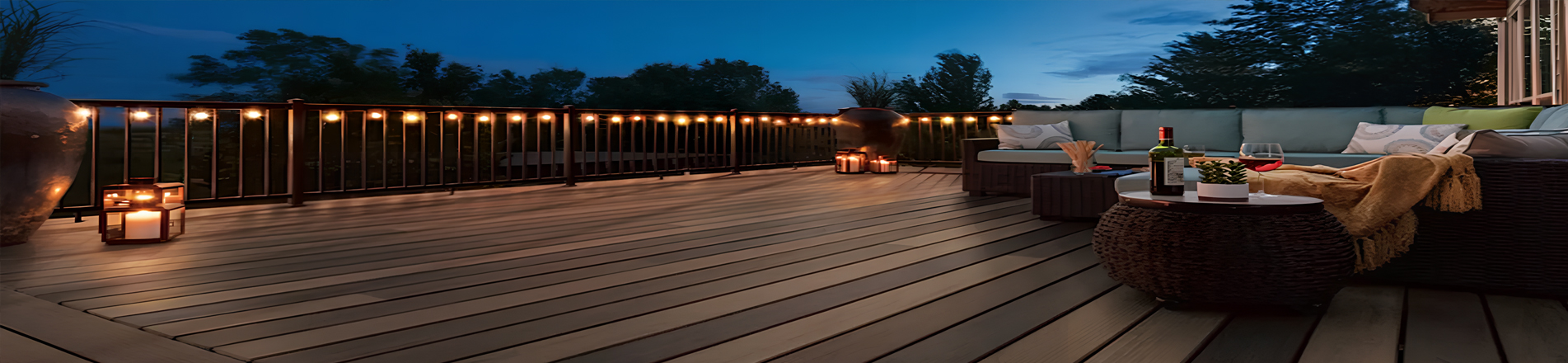
The Garden Deck: Acting as the main stage for the outdoor sanctuary, the WPC decking provided a smooth, barefoot-friendly surface that seamlessly integrated with the minimalist landscaping and stone features.
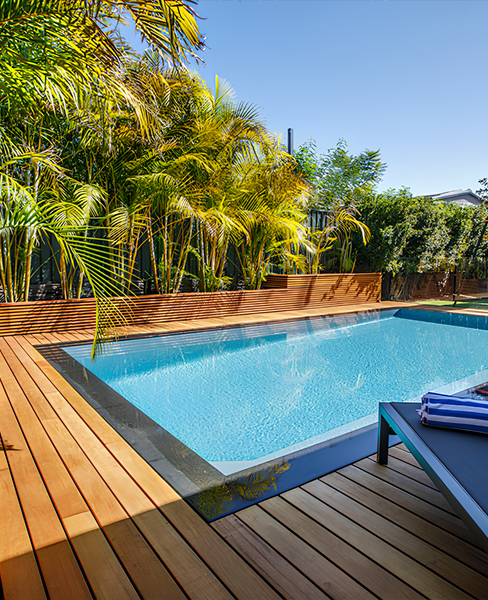
The Poolside: Because WPC is highly moisture-resistant and slip-resistant, it was the safest and most durable choice for the pool surround. It handles water exposure effortlessly without warping or rotting.
The Outdoor Terrace & Balcony: For the elevated viewing areas, the lightweight yet structurally robust nature of WPC panels made installation efficient. The natural wood grain finish elevated these smaller spaces, turning a basic balcony into a high-end retreat.
The Result: A Maintenance-Free Luxury Experience
By utilizing WPC decking, the project successfully delivered an outdoor space that defines quiet luxury. The material choice ensured that the Japandi aesthetic—characterized by simplicity, nature, and comfort—was not just achieved on day one, but will be preserved for decades.
For architects, landscape designers, and property developers, WPC decking proves that you do not have to sacrifice durability to achieve high-end, natural designs. It is the ultimate material choice for creating modern, minimalist outdoor spaces that are built to last.


 English
 Español
 بالعربية